OPHTHALMOLOGISTS CARE

Understanding Cataract

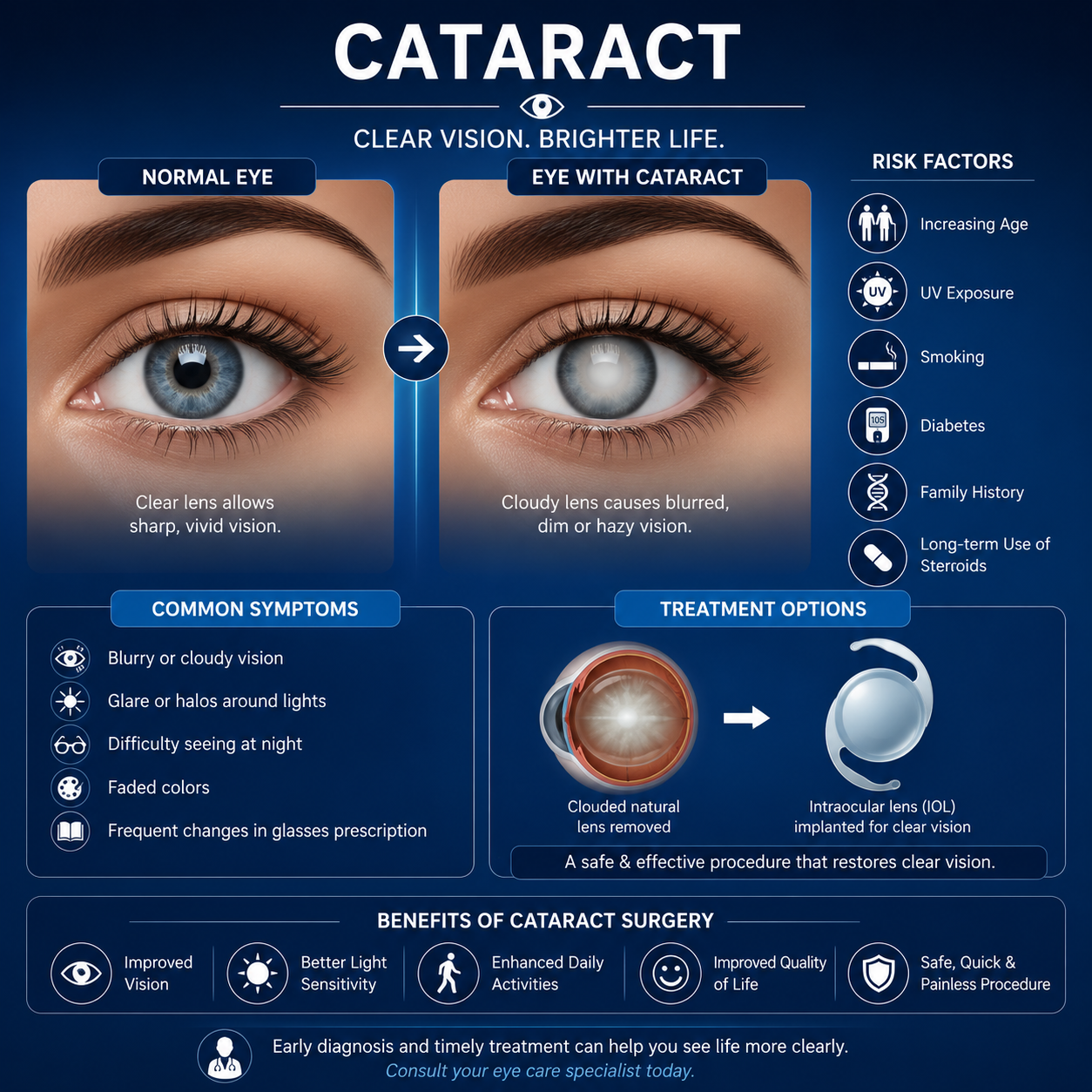
A cataract is a common eye condition in which the natural lens of the eye becomes cloudy, leading to blurred or impaired vision. It usually develops gradually with age but can also result from injury, certain medical conditions, or prolonged use of medications. Cataracts can affect one or both eyes and, if left untreated, may significantly interfere with daily activities.

Cataract surgery is a safe and effective procedure that replaces the cloudy lens with a clear artificial intraocular lens (IOL), restoring vision.

Common Symptoms
Blurred vision
Cloudy vision
Night trouble
Light sensitivity
Halos
Frequent Rx change
Faded colors
Double vision

Same day

Return Home

1–3 days

Improved Vision

3–7 days

Resume Routine

4–6 weeks

Complete Healing

1K+

Successful Treatments

Trusted care
Potential Benefits
Clear vision
Night vision
Color clarity
Less glare
Independence
Better life
Safe & lasting

Types of Cataracts

Age-Related Cataract: Most common; develops gradually with aging.

Congenital Cataract: Present at birth or in infancy due to genetics or maternal factors.

Traumatic Cataract: Forms after eye injury, sometimes years later.

Secondary Cataract: Caused by conditions like diabetes, steroids, or prior eye surgery.

Nuclear Cataract: Affects the lens center; common with age.

Cortical Cataract: Starts at lens edge and moves inward.

Posterior Subcapsular Cataract: Forms at the back of the lens; often progresses quickly.

Treatment and Surgical Options

Observation & Lifestyle: Early cataracts managed with glasses, better lighting, and regular eye exams.

Phacoemulsification: Most common surgery; ultrasound breaks up lens, replaced with artificial IOL.

Laser-Assisted Surgery (FLACS): Uses laser for precise steps; often paired with premium lenses.

Extracapsular Extraction (ECCE): For dense cataracts; lens removed through larger incision, IOL implanted.

Premium IOLs: Options include monofocal, multifocal, toric, and EDOF lenses for tailored vision.

Common Causes:

Natural Aging
Most common cause
Diabetes
Increases cataract risk
Eye Injuries
Trauma to the eye
Long-term Corticosteroid Use
Steroid medications
Excessive UV Exposure
Sunlight or tanning beds
Smoking
Increases cataract risk
Alcohol Abuse
Heavy drinking
Previous Eye Surgery
Surgical complications
Genetic Factors
Family history
Congenital Conditions
Present at birth

Cataract Surgery FAQs

Answers to common questions about cataracts, surgery, recovery, and results.

Cataracts develop when proteins in the eye's natural lens break down and clump together over time, causing the lens to become cloudy. Aging is the most common cause.

No. Cataract surgery is usually performed under local anesthesia using eye drops or injections. Most patients experience little or no pain during the procedure.

The procedure typically takes 15 to 30 minutes per eye and is usually performed as a daycare surgery.

Most patients can return to light daily activities within 1 to 3 days, although strenuous activities and heavy lifting should be avoided for several weeks.

Many patients experience improved vision after surgery, but some may still require glasses for reading or certain activities, depending on the type of intraocular lens implanted.

No. A cataract cannot return once the cloudy lens has been removed. However, some patients may develop posterior capsule opacification (PCO), sometimes called a "secondary cataract," which can be easily treated with a quick laser procedure.

Yes. Cataract surgery is one of the safest and most successful surgical procedures, with a high success rate and excellent long-term outcomes when performed by an experienced ophthalmologist.

Still Have Questions?

Book a consultation with our experienced specialists for personalized treatment guidance.

Book Consultation