PREMIUM OB-GYNs CARE

Understanding Gynaecology

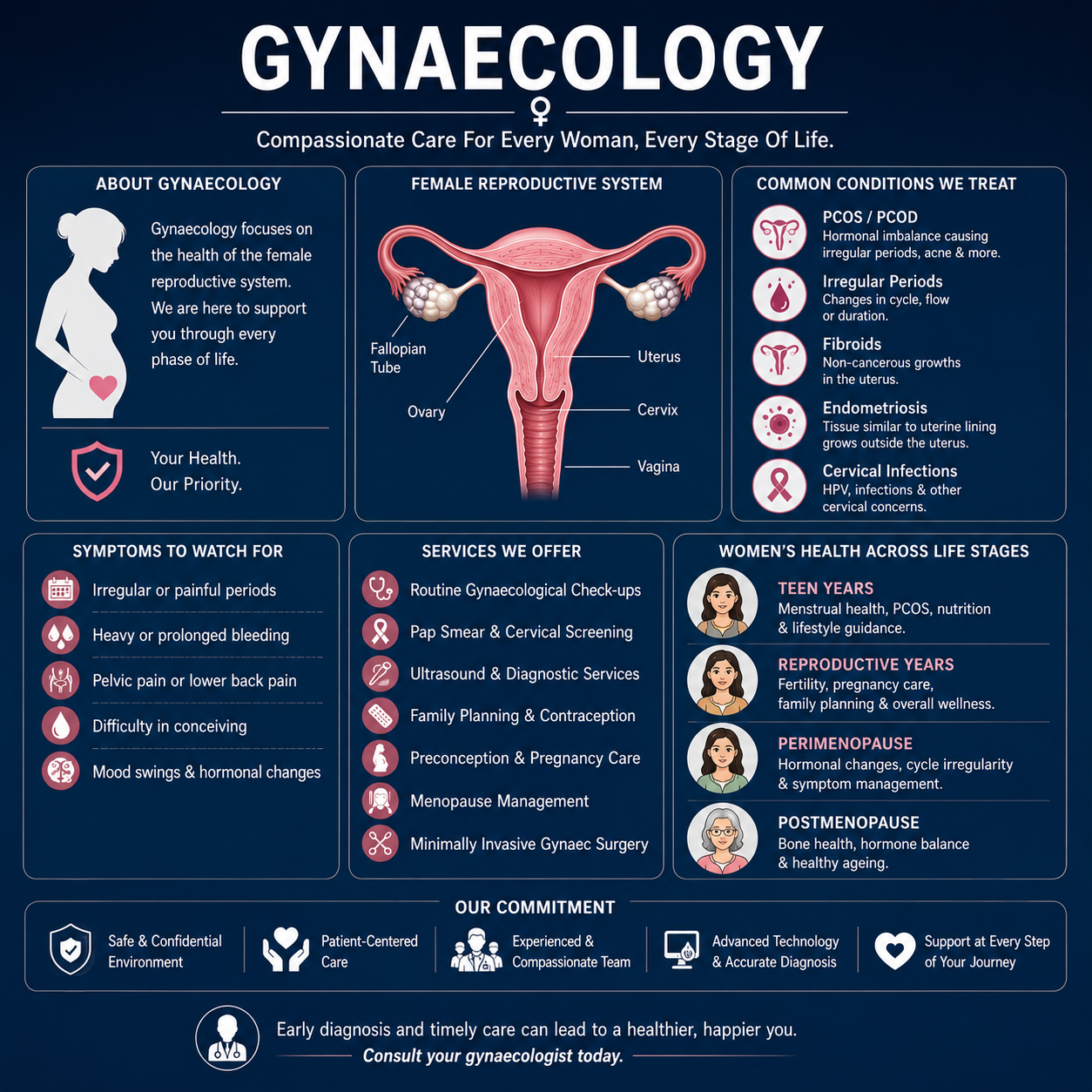
Gynaecology is the branch of medicine that focuses on the diagnosis, treatment, and prevention of conditions affecting the female reproductive system, including the uterus, ovaries, fallopian tubes, cervix, vagina, and breasts.

Gynaecologists provide care for women at every stage of life, from adolescence to menopause, managing menstrual disorders, pregnancy-related conditions, infertility, hormonal imbalances, and various gynecological diseases through medical and surgical treatments.

Common Symptoms
Irregular cycles
Heavy bleeding
Severe cramps
Pelvic pain
Abnormal discharge
Spotting
Painful intercourse
Infertility
Frequent urination

1–3 days

Hysteroscopy

1–2 weeks

Laparoscopic Surgery

4–6 weeks

Open Gynecological Surgery

1–2 weeks

Robotic Surgery

1K+

Successful Treatments

Trusted care
Potential Complications
Infection
Bleeding
Pain or discomfort
Blood clots (rare)
Injury to organs (rare)
Adhesion formation
Delayed healing
Recurrence

Treatment Options

Treatment depends on the specific gynecological condition and may include:

Medications: Many conditions can be managed with antibiotics, hormonal therapy, pain relievers, or fertility medications.

Minimally Invasive Surgery (Laparoscopy): Uses small incisions and specialized instruments to treat ovarian cysts, fibroids, endometriosis, and ectopic pregnancy.

Hysteroscopy: A thin telescope is inserted through the cervix to examine and treat uterine abnormalities like polyps, fibroids, and abnormal bleeding.

Open Gynecological Surgery: Recommended for complex conditions not suitable for minimally invasive techniques.

Robotic-Assisted Gynecological Surgery: Robotic technology allows complex procedures with enhanced precision, smaller incisions, less pain, and faster recovery.

Types of Gynaecological Conditions

Menstrual Disorders: Includes irregular periods, heavy menstrual bleeding, painful menstruation, and absent periods.

Polycystic Ovary Syndrome (PCOS): A hormonal disorder affecting ovulation, menstrual cycles, fertility, and metabolism.

Uterine Fibroids: Non-cancerous growths in the uterus that may cause heavy bleeding, pelvic pain, or fertility problems.

Ovarian Cysts: Fluid-filled sacs on or inside the ovaries that may require treatment if large or symptomatic.

Endometriosis: Tissue similar to the uterine lining grows outside the uterus, causing pelvic pain and infertility.

Pelvic Organ Prolapse: Occurs when pelvic organs descend due to weakened pelvic floor muscles.

Gynecological Cancers: Includes cancers of the cervix, uterus, ovaries, vulva, and vagina.

Common Causes:

Hormonal Imbalance
Hormone changes
Genetic Factors
Family history
Infections
Bacterial/viral
Endometriosis
Tissue growth
Uterine Fibroids
Uterine growths
Ovarian Cysts
Ovary cysts
PCOS
Ovary disorder
Lifestyle
Obesity, smoking
Aging & Menopause
Age changes

Gynecology FAQs

Answers to common questions about gynecological health, treatments, and care.

A gynecologist diagnoses and treats conditions affecting the female reproductive system, including menstrual disorders, PCOS, fibroids, ovarian cysts, endometriosis, infertility, and gynecological cancers.

Most women are advised to have their first gynecological visit between the ages of 13 and 21, or earlier if they experience menstrual problems, pelvic pain, or other symptoms.

No. Many conditions can be effectively managed with medications, hormonal therapy, lifestyle changes, or minimally invasive procedures. Surgery is recommended only when necessary.

The duration depends on the procedure but typically ranges from 30 minutes to 3 hours.

Most patients return to desk work within 1 to 2 weeks after minimally invasive surgery, while recovery after open surgery may take 4 to 6 weeks.

Yes. Conditions such as PCOS, endometriosis, uterine fibroids, and certain infections can affect fertility. Early diagnosis and appropriate treatment can improve reproductive outcomes.

Women should have regular gynecological check-ups, typically once a year, or more frequently if they have ongoing symptoms or specific medical conditions.

Still Have Questions?

Book a consultation with our experienced specialists for personalized treatment guidance.

Book Consultation