UROLOGISTS CARE

Understanding Kidneystone

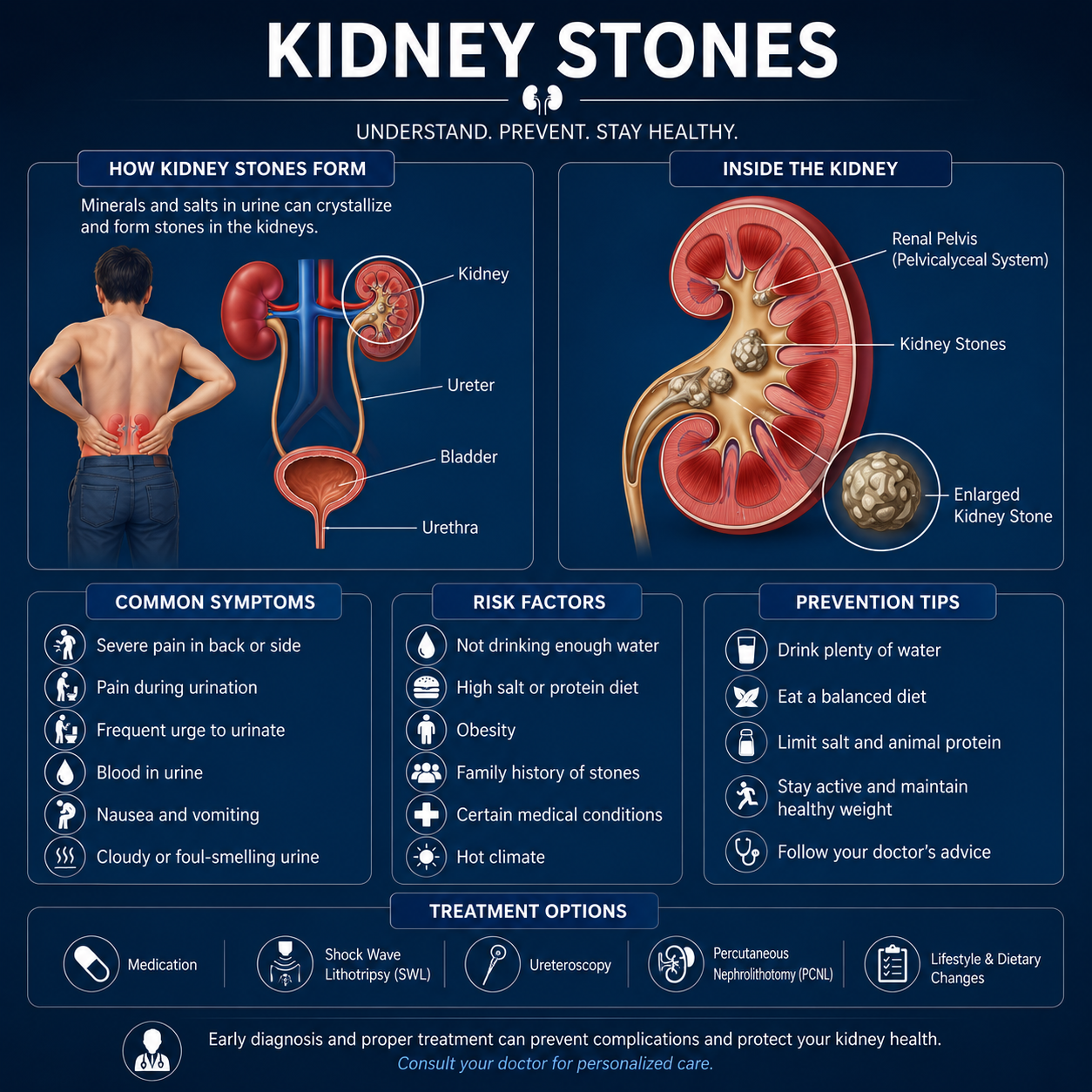
Kidney stones are hard deposits of minerals and salts that form inside the kidneys when certain substances in the urine become highly concentrated and crystallize. These stones can vary in size from tiny grains to larger stones and may remain in the kidney or travel through the urinary tract.

While small stones may pass naturally, larger stones can cause severe pain, urinary obstruction, infection, and other complications, requiring medical or surgical treatment.

Common Symptoms
Severe pain
Pain to groin
Burning urination
Blood in urine
Frequent urination
Cloudy urine
Nausea
Fever/chills

1–3 days

ESWL

3–7 days

URS with Laser

3–7 days

RIRS

2–4 weeks

PCNL

1K+

Successful Treatments

Trusted care
Potential Benefits
Pain relief
Obstruction gone
Kidney safe
Fewer infections
Better function
Quick recovery
Better life

Types of Kidney Stones

Calcium Stones: Most common; made of calcium oxalate or phosphate. Linked to diet, dehydration, or metabolism.

Uric Acid Stones: Form in acidic urine; common with gout, diabetes, or high animal protein intake.

Struvite Stones: Result from recurrent urinary infections; can grow large quickly.

Cystine Stones: Rare; caused by inherited cystinuria, leading to excess cystine in urine.

Treatment and Surgical Options

Conservative Treatment: Small stones may pass with fluids, pain relief, and medications to relax the urinary tract.

Extracorporeal Shock Wave Lithotripsy (ESWL): Shock waves break stones into fragments that pass naturally in urine; best for small to medium stones.

Ureteroscopy (URS) with Laser: A scope locates the stone, which is broken by laser and removed or passed naturally.

Retrograde Intrarenal Surgery (RIRS): A flexible scope and laser treat kidney stones minimally invasively.

Percutaneous Nephrolithotomy (PCNL): For large stones; stones are removed directly via a small back incision.

Common Causes:

Dehydration
Low water intake
Poor Diet
High salt, sugar, or protein
Urine Imbalance
High calcium, oxalate, uric acid
Obesity
Increased risk
Metabolic Disorders
Affects stone formation
UTIs
Recurrent infections
Family History
Genetic risk
Medications
Certain drugs & supplements

Kidney Stone FAQs

Answers to common questions about kidney stones, treatment, recovery, and prevention.

Kidney stones form when minerals and salts in the urine become highly concentrated and crystallize. Dehydration, dietary habits, genetic factors, and certain medical conditions can increase the risk.

Yes. Small kidney stones often pass on their own with adequate hydration and medication. Larger stones may require medical procedures for removal.

Modern procedures such as ESWL, URS, RIRS, and PCNL are performed under appropriate anesthesia, making the treatment comfortable. Mild discomfort during recovery is usually manageable with medications.

The duration depends on the procedure. Most minimally invasive treatments take 30 minutes to 2 hours, depending on the size and location of the stone.

Most patients can return to desk work within 3 to 7 days after minimally invasive procedures such as URS or RIRS. Recovery after PCNL may take 2 to 4 weeks.

Yes. Kidney stones can recur if preventive measures are not followed. Drinking plenty of water, maintaining a balanced diet, and following your doctor's recommendations can significantly reduce the risk.

Yes. Staying well hydrated, reducing salt intake, eating a balanced diet, maintaining a healthy weight, and treating underlying medical conditions can help prevent the formation of kidney stones.

Still Have Questions?

Book a consultation with our experienced specialists for personalized treatment guidance.

Book Consultation