GENERAL SURGERY CARE

Understanding Hernia

A hernia is a medical condition in which an internal organ or fatty tissue pushes through a weakened area or opening in the surrounding muscle or connective tissue. Hernias most commonly occur in the abdomen or groin and may appear as a visible bulge that becomes more noticeable when standing, coughing, or lifting heavy objects.

Although some hernias may not cause symptoms initially, they do not heal on their own and often require surgical repair to prevent complications.

Common Symptoms
Visible bulge
Pain with activity
Heaviness
Burning or aching
Ab weakness
Swelling

1–2 weeks

Laparoscopic

1–2 weeks

Open Hernia Surgery

4–6 weeks

Complete Healing

1K+

Successful Treatments

Trusted care
Potential Benefits
Pain relief
Prevents growth
Fewer complications
Faster recovery

Types of Hernia:

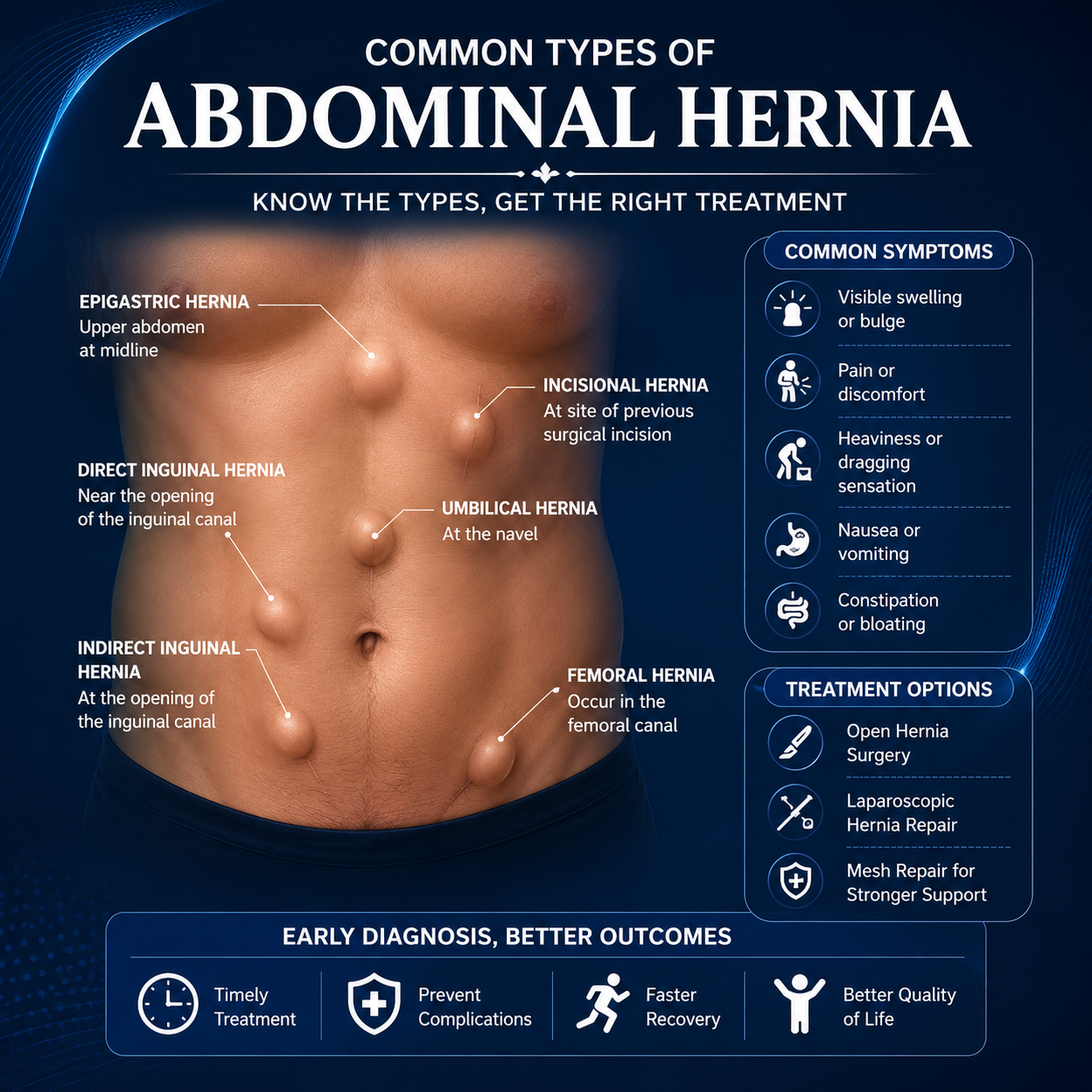
Inguinal Hernia: Most common type; intestine or fat pushes through lower abdominal wall or groin, more common in men.

Femoral Hernia: Tissue pushes through upper thigh near femoral canal; less common, more in women, higher risk of complications.

Umbilical Hernia: Tissue bulges near the belly button; common in infants, can occur in adults after pregnancy or weight gain.

Incisional Hernia: Forms at previous surgical site when muscles don't heal fully, allowing tissue to protrude.

Hiatal Hernia: Part of the stomach pushes through the diaphragm into the chest; often causes acid reflux, no visible bulge.

Epigastric Hernia: Fatty tissue protrudes through upper abdominal wall between breastbone and belly button.

Common Causes:

Weak Muscles
Congenital or age-related
Heavy Lifting
Without proper support
Chronic Cough
Increases abdominal pressure
Constipation
Straining during bowel movements
Obesity
Extra abdominal pressure
Pregnancy
Muscle stretching
Past Surgery
Weak incision site
Physical Strain
Strenuous activity
Enlarged Prostate
Straining to urinate
Smoking
Weakens tissues

Hernia FAQs

Answers to common questions about hernia causes, treatment, and recovery.

No. Hernias do not heal on their own. While supportive measures may help relieve symptoms temporarily, surgery is the only definitive treatment.

A hernia develops when an internal organ or fatty tissue pushes through a weakened area in the muscle or connective tissue. Risk factors include heavy lifting, obesity, chronic coughing, constipation, pregnancy, and previous surgery.

The procedure is performed under anesthesia, so you will not feel pain during surgery. Mild discomfort after surgery is common and can usually be managed with prescribed pain medication.

Most hernia repair procedures take 30 to 90 minutes, depending on the type and complexity of the hernia.

Most patients can return to desk work within 3 to 7 days after laparoscopic surgery or 2 to 3 weeks after open surgery, depending on recovery and the nature of their job.

Although recurrence is uncommon, it can occur. Following your surgeon's advice regarding wound care, weight management, and avoiding heavy lifting can help reduce the risk.

Laparoscopic hernia repair generally offers smaller incisions, less postoperative pain, reduced scarring, and a quicker recovery. However, the most appropriate surgical technique depends on the type and size of the hernia, as well as the patient's overall health.

Still Have Questions?

Book a consultation with our experienced specialists for personalized treatment guidance.

Book Consultation