COSMETIC SURGERY CARE

Understanding Hair Transplantation

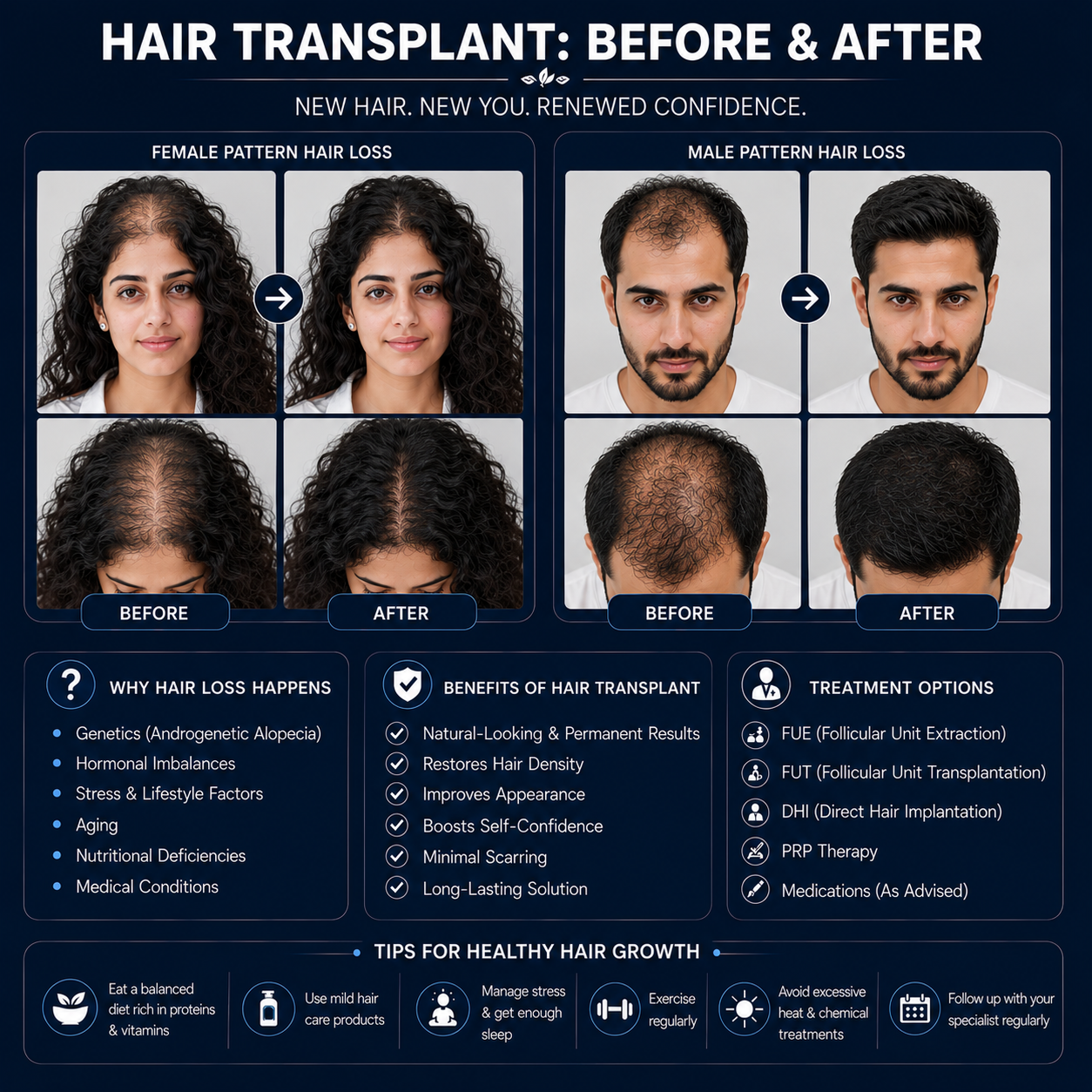
Hair transplantation is a minimally invasive cosmetic procedure that restores hair growth by transferring healthy hair follicles from a donor area, usually the back or sides of the scalp, to areas affected by hair loss or thinning. It is commonly performed to treat male and female pattern baldness, receding hairlines, and hair loss caused by injury or surgery.

Hair transplantation provides natural-looking, permanent results when performed by an experienced specialist.

Common Symptoms
Thinning hair
Receding line
Bald spots
Hair shedding
Low density
Patchy loss
Low confidence

5–7 days

FUE Hair Transplant

10–14 days

FUT Hair Transplant

2–4 weeks

Complete Healing

1K+

Successful Treatments

Trusted care
Potential Benefits
Natural look
More density
Better appearance
Confidence
Minimally invasive
Own follicles
Lasting results

Hair Transplant Techniques

Follicular Unit Extraction (FUE): Minimally invasive; individual follicles are extracted and transplanted. Leaves tiny scars, heals quickly, and looks natural.

Follicular Unit Transplantation (FUT): Also called the strip method; a thin strip of scalp is removed, follicles are separated and transplanted. Ideal for more grafts.

Direct Hair Implantation (DHI): An advanced FUE; follicles are implanted directly with a special pen for precise angle, depth, and direction.

Robotic Hair Transplantation: Uses AI and imaging to assist in harvesting and implanting follicles with high precision.

Common Causes:

Genetic Predisposition
Androgenetic alopecia
Hormonal Changes
Hormone level shifts
Aging
Natural aging process
Nutritional Deficiencies
Lack of essential nutrients
Stress
Physical or emotional stress
Thyroid Disorders
Thyroid hormone imbalance
Autoimmune Diseases
Immune system attacks hair
Certain Medications
Side effects of drugs
Scalp Infections/Injuries
Infections or trauma
Chemotherapy/Radiation
Cancer treatments

Hair Transplantation FAQs

Answers to common questions about hair transplantation, candidacy, recovery, and results.

Yes. The transplanted hair follicles are usually permanent because they are taken from areas of the scalp that are genetically resistant to hair loss.

Ideal candidates are individuals with stable hair loss, sufficient donor hair, good overall health, and realistic expectations about the results.

The procedure is performed under local anesthesia, so you should not feel pain during the surgery. Mild discomfort afterward is common and can usually be managed with prescribed medications.

Hair transplantation typically takes 4 to 8 hours, depending on the number of grafts being transplanted.

Most patients can return to desk work within 2 to 5 days, depending on the procedure and their recovery.

New hair growth usually begins within 3 to 4 months, while the full results are typically visible after 9 to 12 months.

Some transplanted hairs may shed within the first few weeks, which is a normal part of the healing process known as shock loss. New, permanent hair growth typically starts a few months later.

Still Have Questions?

Book a consultation with our experienced specialists for personalized treatment guidance.

Book Consultation