GENERAL SURGERY CARE

Understanding Varicose veins

Varicose veins are enlarged, swollen, and twisted veins that most commonly develop in the legs and feet due to weakened or damaged vein valves. When these valves fail to function properly, blood pools inside the veins instead of flowing efficiently back to the heart, causing the veins to become enlarged and visible.

Although varicose veins are often a cosmetic concern, they can also cause pain, swelling, heaviness, and discomfort, and may require medical treatment if symptoms become severe.

Common Symptoms
Twisted veins
Aching pain
Leg heaviness
Swelling
Burning/itching
Pain after standing
Skin discoloration
Leg ulcers

2–7 days

Laser Treatment (EVLT)

2–7 days

Radiofrequency Ablation (RFA)

1–3 days

Sclerotherapy

2–4 weeks

Vein Stripping Surgery

2–6 weeks

Complete Recovery

1K+

Successful Treatments

Trusted care
Potential Benefits
Pain relief
Less swelling
Better circulation
Cosmetic boost
Prevents ulcers
More mobility
Minimally invasive

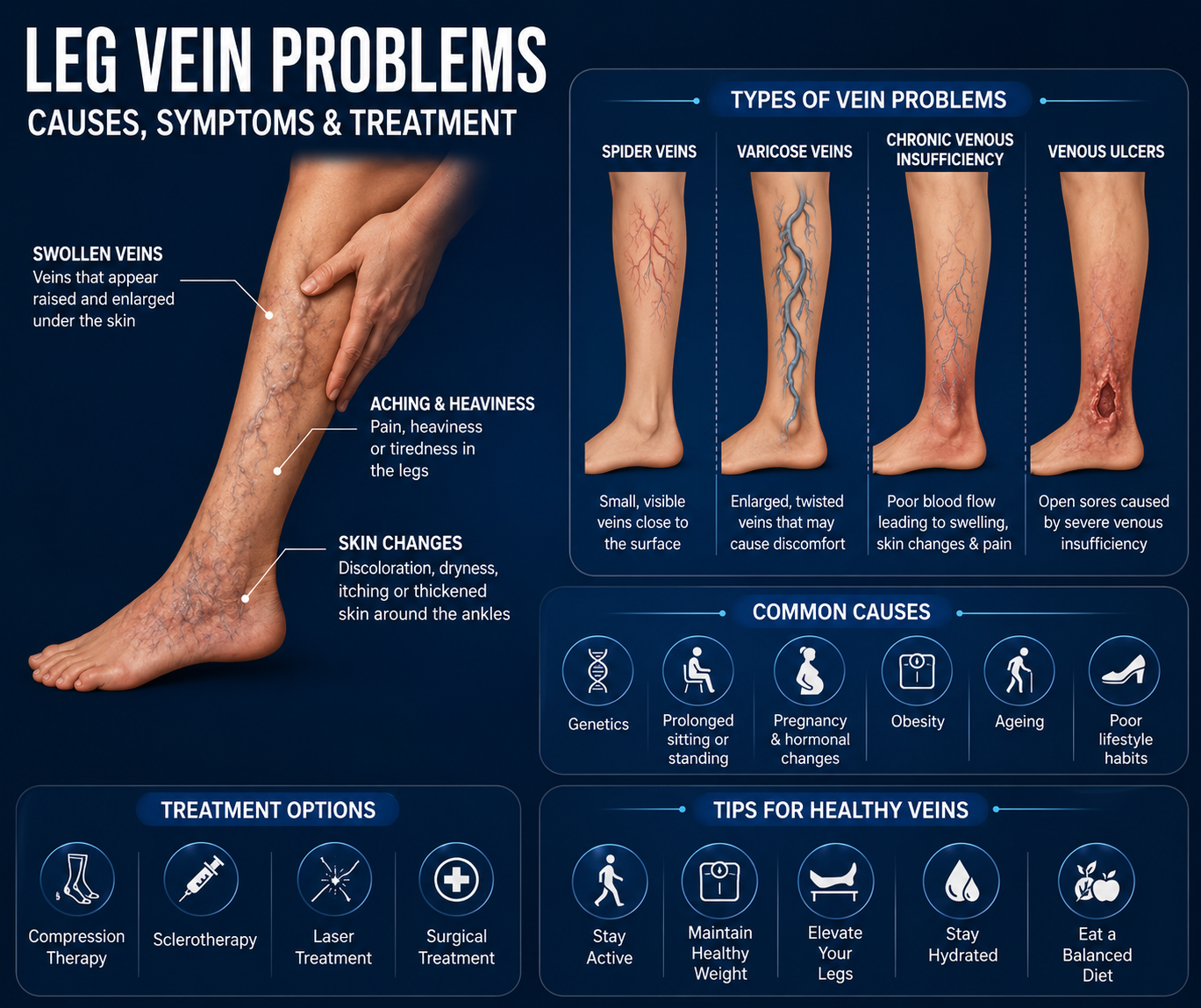
Types of Vein Conditions:

Varicose Veins: Enlarged, twisted blue or purple veins in the legs; may cause pain, swelling, and heaviness.

Spider Veins: Small, thin red, blue, or purple veins near the skin surface; usually painless and mainly cosmetic.

Chronic Venous Insufficiency (CVI): Long-term poor blood return from legs; leads to swelling, skin changes, and sometimes ulcers.

Deep Vein Thrombosis (DVT): Blood clot in a deep leg vein; serious and needs urgent care as the clot can travel to the lungs.

Venous Ulcers: Slow-healing wounds near the ankles from long-standing vein problems and poor circulation.

Common Causes:

Weak Valves
Vein valve failure
Aging
Vein wear over time
Pregnancy
Increased pressure
Obesity
Extra leg pressure
Prolonged Sitting/Standing
Poor circulation
Genetics
Family history
Leg Pressure
Increased vein pressure
Past DVT
Vein damage

Varicose Veins FAQs

Answers to common questions about varicose veins causes, treatment, and recovery.

Varicose veins develop when the valves inside the veins become weak or damaged, allowing blood to pool in the veins instead of flowing efficiently back to the heart.

Most varicose veins are not life-threatening, but if left untreated, they can lead to complications such as chronic venous insufficiency, skin ulcers, bleeding, or blood clots.

Laser treatment is minimally invasive and is usually performed under local anesthesia. Most patients experience only mild discomfort during and after the procedure.

Most minimally invasive procedures, such as laser treatment or radiofrequency ablation, take 30 to 60 minutes and are performed as daycare procedures.

Most patients can return to desk work within 1 to 3 days after minimally invasive treatment, while recovery after surgical vein stripping may take 2 to 4 weeks.

Yes, new varicose veins can develop over time, especially if underlying risk factors persist. Maintaining a healthy weight, staying physically active, and following your doctor's recommendations can help reduce the risk of recurrence.

No. Many patients can be effectively treated with minimally invasive procedures such as Endovenous Laser Therapy (EVLT), Radiofrequency Ablation (RFA), or Sclerotherapy, depending on the severity of the condition. Surgery is typically reserved for more advanced or complex cases.

Still Have Questions?

Book a consultation with our experienced specialists for personalized treatment guidance.

Book Consultation