OTORHINOLARYNGOLOGY CARE

Understanding ENT

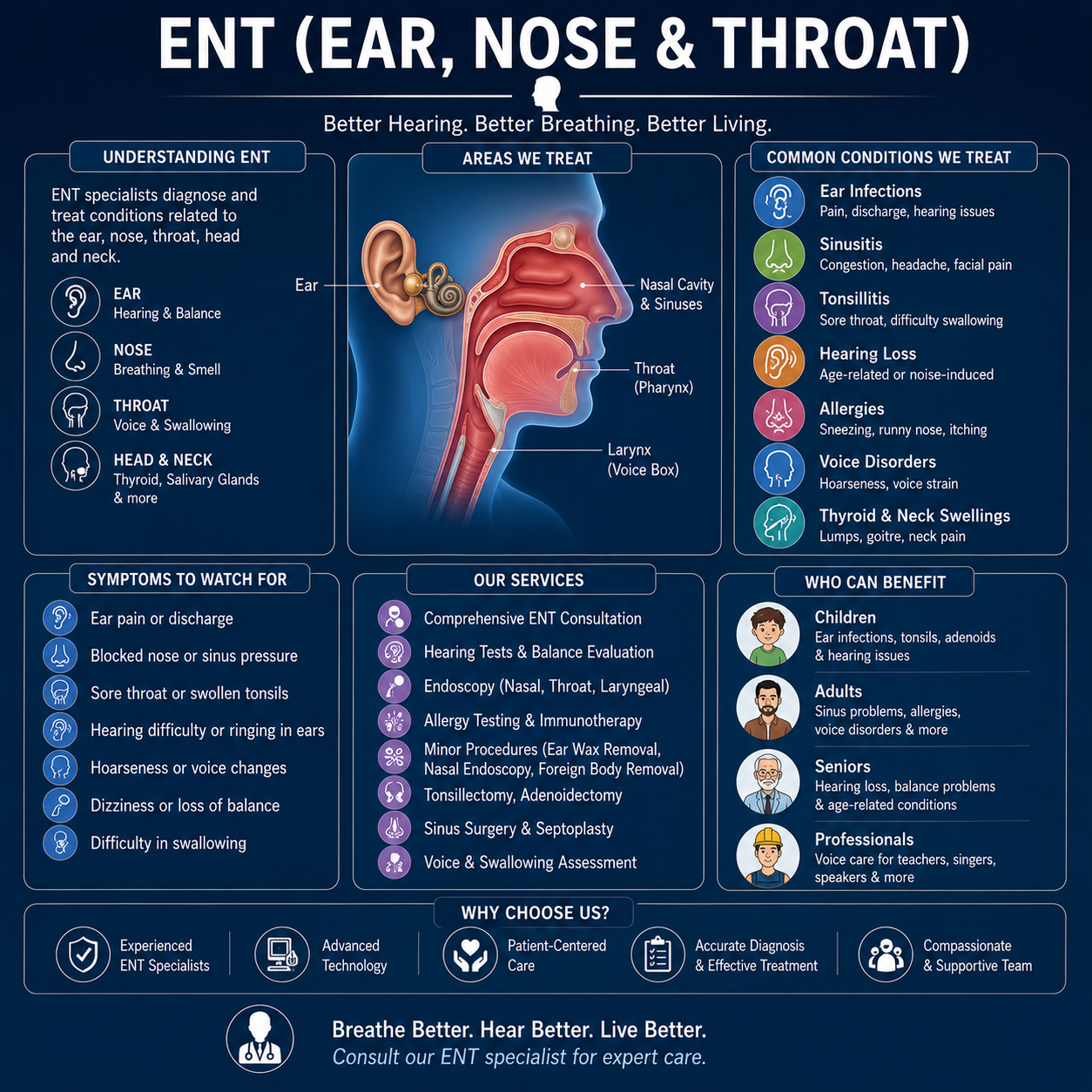
ENT (Ear, Nose, and Throat), also known as Otorhinolaryngology, is the medical specialty that focuses on the diagnosis, treatment, and prevention of disorders affecting the ears, nose, throat, head, and neck. ENT specialists treat a wide range of conditions, including hearing loss, sinus infections, tonsillitis, nasal obstruction, thyroid disorders, voice problems, and sleep-related breathing disorders.

Treatment may involve medications, minimally invasive procedures, or surgery, depending on the condition.

Common Symptoms
Ear pain
Hearing loss
Nasal blockage
Sinusitis
Sore throat
Swallowing issues
Hoarseness
Snoring
Dizziness
Neck swelling

1–2 weeks

Endoscopic Sinus Surgery

10–14 days

Tonsillectomy

1–2 weeks

Septoplasty

2–4 weeks

Tympanoplasty

2–4 weeks

Thyroid Surgery

1K+

Successful Treatments

Trusted care
Potential benefits
Pain relief
Better breathing
Improved hearing
Fewer infections
Better sleep
Better voice/swallow
Quality of life
Faster recovery

Treatment Options

Treatment depends on the specific ENT condition and may include:

Medical Management: Many ENT conditions can be treated with medications such as antibiotics, antihistamines, nasal sprays, steroids, or allergy treatments.

Endoscopic Sinus Surgery (FESS): Functional Endoscopic Sinus Surgery (FESS) is a minimally invasive procedure used to treat chronic sinusitis, nasal polyps, and blocked sinus passages.

Tonsillectomy and Adenoidectomy: Surgical removal of the tonsils and/or adenoids is commonly performed for recurrent infections or obstructive sleep apnea.

Septoplasty: Septoplasty corrects a deviated nasal septum to improve breathing and relieve chronic nasal blockage.

Tympanoplasty: A surgical procedure performed to repair a perforated eardrum and restore hearing.

Thyroid and Head & Neck Surgery: ENT specialists also perform surgery for thyroid disorders, salivary gland diseases, and certain head and neck tumors.

Common Causes:

Infections
Viral/Bacterial
Allergies
Allergic reactions
Deviated Septum
Nasal blockage
Sinusitis
Chronic inflammation
Loud Noise
Hearing loss
Smoking
ENT irritation
Pollution
Environmental
Acid Reflux
Throat irritation
Congenital
Birth defects
Tumors
ENT/Neck growths

ENT FAQs

Answers to common questions about ENT (Ear, Nose, and Throat) health, treatments, and care.

ENT specialists diagnose and treat conditions affecting the ears, nose, throat, head, and neck, including sinusitis, tonsillitis, hearing loss, ear infections, nasal obstruction, thyroid disorders, and sleep apnea.

You should see an ENT specialist if you have persistent ear, nose, or throat symptoms that do not improve with routine treatment, or if you experience hearing loss, chronic sinus infections, or difficulty swallowing.

Yes. Most ENT procedures are safe and minimally invasive, with high success rates when performed by experienced specialists.

The duration depends on the procedure, but most ENT surgeries take 30 minutes to 2 hours.

Most patients can return to desk work within 1 to 2 weeks, depending on the type of procedure and their recovery.

Yes. Pediatric ENT specialists are trained to diagnose and treat ear, nose, and throat disorders in infants and children.

Many chronic sinus conditions can be effectively managed with medications. If symptoms persist, minimally invasive procedures such as Functional Endoscopic Sinus Surgery (FESS) may provide long-term relief.

Still Have Questions?

Book a consultation with our experienced specialists for personalized treatment guidance.

Book Consultation