ORTHOPAEDIC CARE

Understanding Knee Replacement

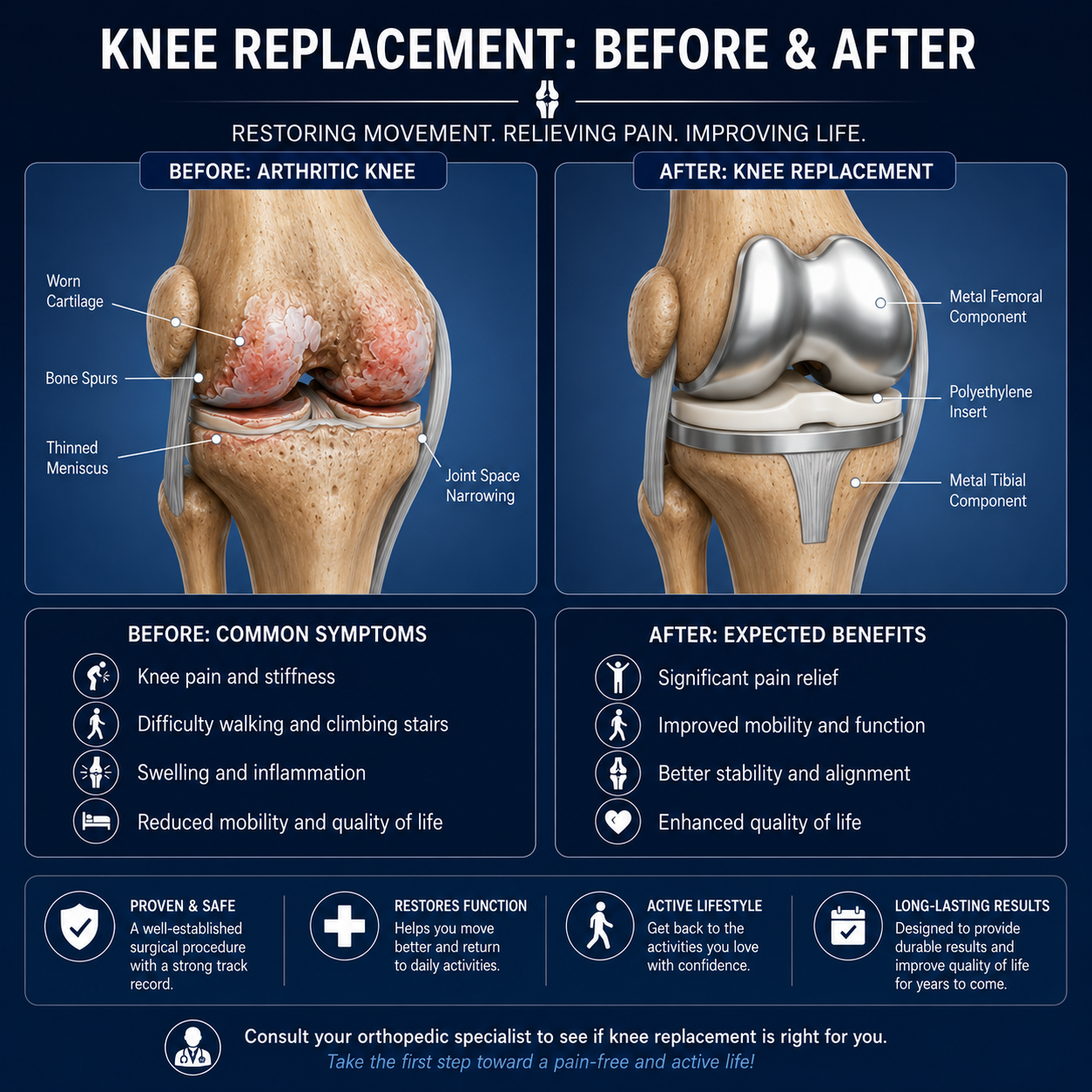
Knee replacement, also known as knee arthroplasty, is a surgical procedure in which damaged or worn-out parts of the knee joint are replaced with artificial implants made of metal, ceramic, or medical-grade plastic. It is commonly recommended for individuals with severe knee pain, stiffness, and reduced mobility caused by arthritis, injury, or degenerative joint disease when non-surgical treatments no longer provide relief.

The procedure helps restore joint function, reduce pain, and improve quality of life.

Common Symptoms
Persistent pain
Stiffness
Walking trouble
Swelling
Low mobility
Grinding/clicking
Bowing
Sleep pain

1–3 days

Hospital Stay

1–3 days

Walking with Support

4–6 weeks

Return to Desk Work

6–12 weeks

Resume Daily Activities

3–6 months

Complete Recovery

1K+

Successful Treatments

Trusted care
Potential Benefits
Pain relief
Joint function
Mobility
Quality of life
Daily comfort
Walking & climbing
Long-lasting

Knee Replacement Techniques

Total Knee Replacement (TKR): The entire knee joint is replaced with artificial components. Most common for advanced arthritis affecting the whole knee.

Partial Knee Replacement (PKR): Only the damaged part of the knee is replaced, preserving healthy bone and tissue. Suitable for arthritis in one knee compartment.

Robotic-Assisted Knee Replacement: Uses robotic technology to help the surgeon position the implant with high precision, improving outcomes.

Revision Knee Replacement: Replaces or repairs a previous artificial knee joint that has worn out or developed complications.

Common Causes:

Osteoarthritis
Wear-and-tear arthritis
Rheumatoid Arthritis
Autoimmune arthritis
Post-Traumatic Arthritis
After injury
Severe Fractures
Major knee breaks
Ligament Injuries
Torn knee ligaments
Cartilage Damage
Cartilage loss
Congenital Deformities
Joint malformation
Avascular Necrosis
Bone tissue death

Knee Replacement Surgery FAQs

Answers to common questions about knee replacement, candidacy, recovery, and results.

Knee replacement is recommended for patients with severe arthritis or knee joint damage who continue to experience pain and limited mobility despite medications, physiotherapy, or other conservative treatments.

The procedure typically takes 1 to 2 hours, depending on the type of surgery and the complexity of the case.

The surgery is performed under spinal or general anesthesia. Mild to moderate pain after surgery is expected and is effectively managed with medications and rehabilitation.

Modern knee implants typically last 15 to 20 years or longer, depending on the patient's age, activity level, and overall health.

Most patients begin standing and walking with assistance within 24 hours after surgery under the guidance of a physiotherapist.

Patients with desk jobs can usually return to work within 4 to 6 weeks, while those with physically demanding jobs may require 2 to 3 months or longer.

Yes. Physiotherapy is an essential part of recovery and helps restore knee strength, flexibility, and function while improving long-term outcomes.

Still Have Questions?

Book a consultation with our experienced specialists for personalized treatment guidance.

Book Consultation