PREMIUM UROLOGY CARE

Understanding Circumcision

Circumcision is a surgical procedure that involves the removal of the foreskin, the fold of skin covering the head (glans) of the penis. It may be performed for medical, religious, cultural, or personal reasons. In adults, circumcision is commonly recommended to treat conditions such as phimosis, recurrent infections, balanitis, or painful foreskin.

Modern circumcision techniques are safe, minimally invasive, and typically allow for a quick recovery.

Common Symptoms
Tight foreskin
Can't retract
Painful urination
Infections
Redness/irritation
Hygiene issues
Cracking/bleeding
Painful erection
Trapped foreskin

5–7 days

Laser Circumcision

7–10 days

Stapler Circumcision

2–4 weeks

Conventional Circumcision

1K+

Successful Treatments

Trusted care
Potential Benefits
✓ Better hygiene
✓ Fewer UTIs
✓ Less balanitis
✓ Treats phimosis
✓ Fewer STIs
✓ Lower cancer risk
✓ More comfort
✓ Lasting relief

Circumcision Procedure Types:

Conventional (Open) Circumcision: This traditional surgical method involves removing the foreskin using surgical instruments, followed by stitches to close the incision. It is effective but may require a slightly longer recovery period.

Laser Circumcision: Laser circumcision uses advanced laser technology to precisely remove the foreskin while sealing blood vessels simultaneously. This technique offers minimal bleeding, less pain, reduced swelling, and faster healing compared to conventional surgery.

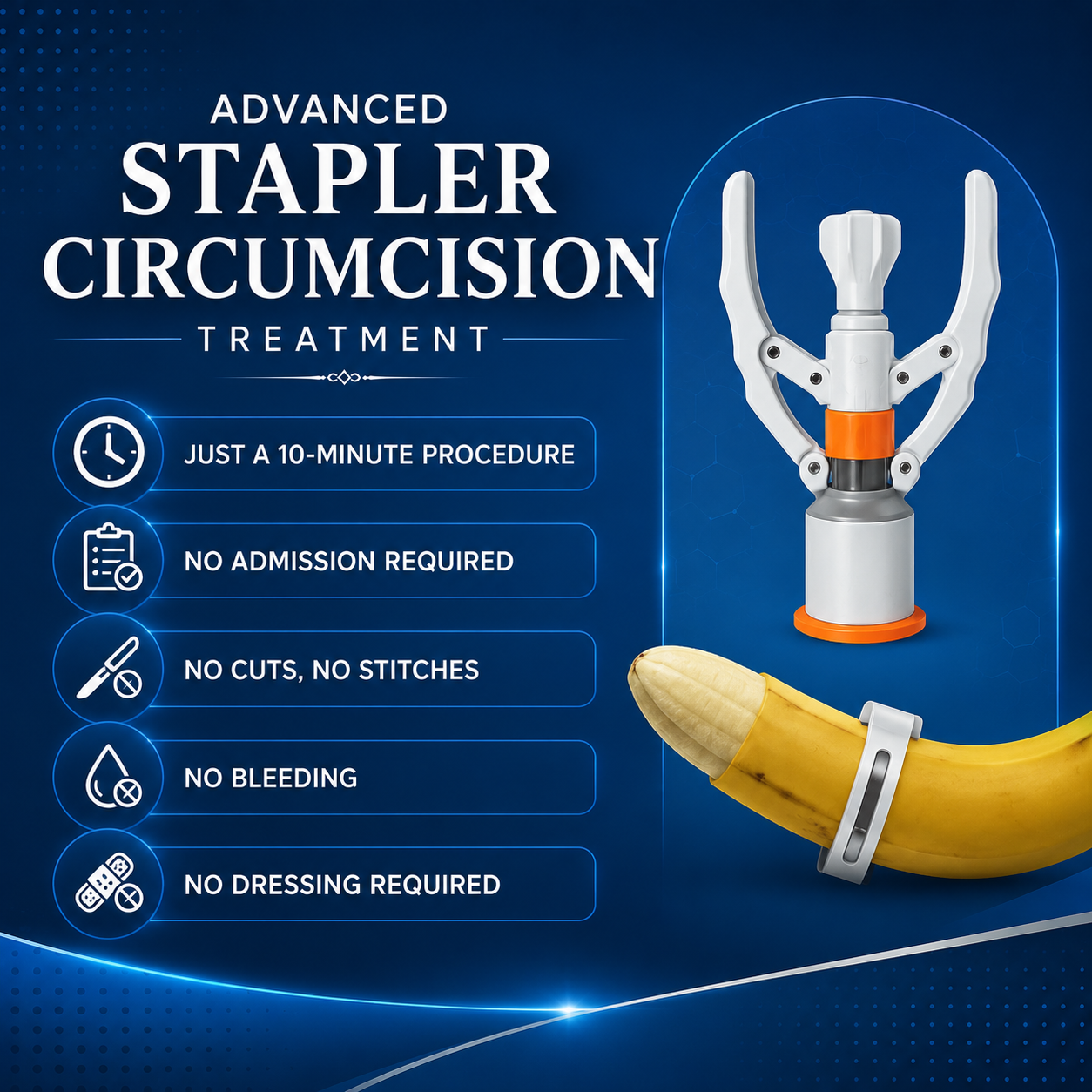
Stapler Circumcision: Stapler circumcision is a modern technique that uses a disposable circular stapling device to remove the foreskin and close the wound simultaneously. It is associated with shorter operative time, minimal bleeding, and quicker recovery.

Common Causes:

Phimosis
Tight foreskin
Paraphimosis
Foreskin stuck back
Balanitis
Glans infection
Balanoposthitis
Glans & foreskin inflamed
Poor Hygiene
Hard to clean
Recurrent UTIs
Repeated infections
Foreskin Scarring
Scar tissue

Circumcision FAQs

Answers to common questions about circumcision treatment, recovery and aftercare.

The procedure is performed under local or general anesthesia, so you will not feel pain during surgery. Mild discomfort after the procedure is normal and can usually be managed with prescribed pain medications.

Adult circumcision is commonly recommended to treat conditions such as phimosis, recurrent balanitis, recurrent urinary tract infections, paraphimosis, or persistent foreskin-related discomfort.

The procedure typically takes 20 to 40 minutes, depending on the surgical technique and the patient's condition.

Most patients can return to office work within 2 to 5 days after laser or stapler circumcision. Recovery may take slightly longer following conventional surgery.

Sexual activity should generally be avoided for 4 to 6 weeks, or until the surgical site has completely healed and your surgeon advises it is safe.

Laser circumcision is often preferred because it involves less bleeding, reduced postoperative pain, smaller wounds, and a faster recovery compared to conventional circumcision. However, the most suitable technique depends on the patient's condition and the surgeon's recommendation.

Still Have Questions?

Book a consultation with our experienced specialists for personalized treatment guidance.

Book Consultation