COSMETIC SURGERY CARE

Understanding Liposuction

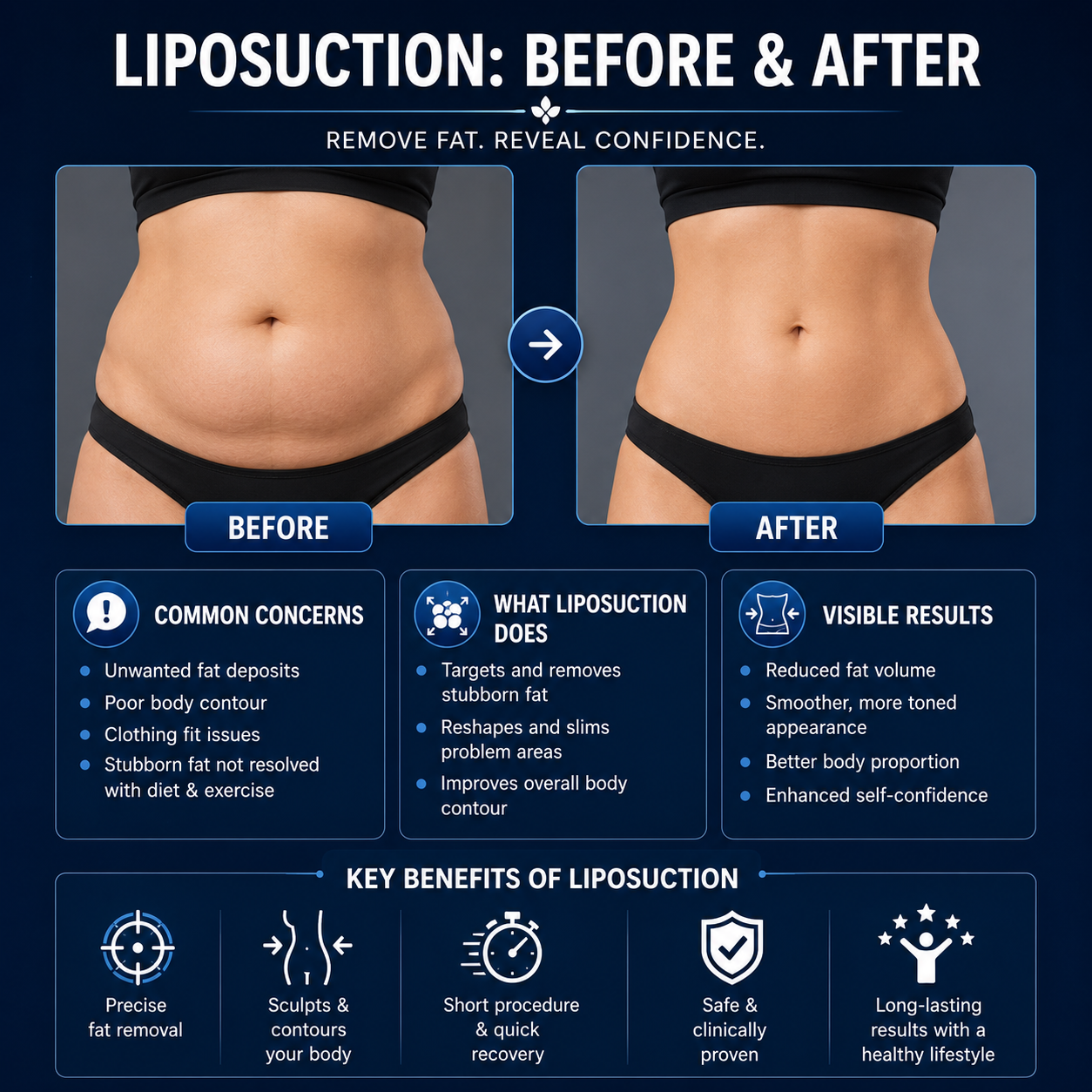
Liposuction is a cosmetic surgical procedure that removes excess fat deposits from specific areas of the body to improve body contour and proportion. It is commonly performed on the abdomen, thighs, hips, buttocks, arms, neck, and back.

Liposuction is designed for body contouring rather than weight loss and is most effective for individuals who have stubborn fat that does not respond to diet and exercise.

Common Symptoms
Stubborn fat
Uneven contour
Localized fat
3–7 days

Minimally Invasive Liposuction

1–2 weeks

Return to Routine Activities

4–6 weeks

Complete Recovery

1K+

Successful Treatments

Trusted care
Potential Benefits
Better contour
Fat removal
Proportions
Confidence
Lasting results
Less scarring

Liposuction Techniques

Tumescent Liposuction: The most common technique. A solution with saline, anesthetic, and medication is injected to reduce bleeding, swelling, and discomfort before fat removal.

Power-Assisted Liposuction (PAL): Uses a vibrating cannula to loosen fat cells for easier, more precise removal.

Ultrasound-Assisted Liposuction (UAL): Ultrasound energy liquefies fat, making it effective for dense or fibrous areas.

Laser-Assisted Liposuction (LAL): Laser melts fat cells before suctioning and may tighten skin by stimulating collagen.

VASER Liposuction: Advanced ultrasound selectively breaks down fat, preserves tissues, and allows smoother contouring and faster recovery.

Common Causes:

Genetic Predisposition
Family history or inherited traits
Weight Gain
Increase in body fat
Hormonal Changes
Shifts in hormone levels
Aging
Natural body changes over time
Sedentary Lifestyle
Lack of physical activity
Poor Dietary Habits
Unhealthy food choices
Pregnancy-Related Changes
Body changes during pregnancy
Slow Metabolism
Reduced calorie burning

Liposuction FAQs

Answers to common questions about liposuction, candidacy, recovery, and results.

No. Liposuction is a body contouring procedure designed to remove localized fat deposits. It is not intended as a treatment for obesity or a substitute for weight loss.

Ideal candidates are adults who are close to their ideal body weight, have good skin elasticity, are in good overall health, and have stubborn fat deposits that do not improve with diet and exercise.

The procedure is performed under local or general anesthesia, so you will not feel pain during surgery. Mild discomfort after the procedure is common and can usually be managed with prescribed medications.

The procedure typically takes 1 to 3 hours, depending on the number of treatment areas and the amount of fat being removed.

Most patients can return to desk work within 3 to 7 days, although recovery may vary depending on the extent of the procedure.

The fat cells removed during liposuction do not return. However, maintaining a healthy diet and regular exercise is essential, as the remaining fat cells can still enlarge with weight gain.

Liposuction primarily removes excess fat and is not a skin-tightening procedure. Patients with significant skin laxity may benefit from additional skin-tightening treatments or body contouring surgery, depending on their individual needs.

Still Have Questions?

Book a consultation with our experienced specialists for personalized treatment guidance.

Book Consultation