PREMIUM PLASTIC SURGERY CARE

Understanding Gynaecomastia

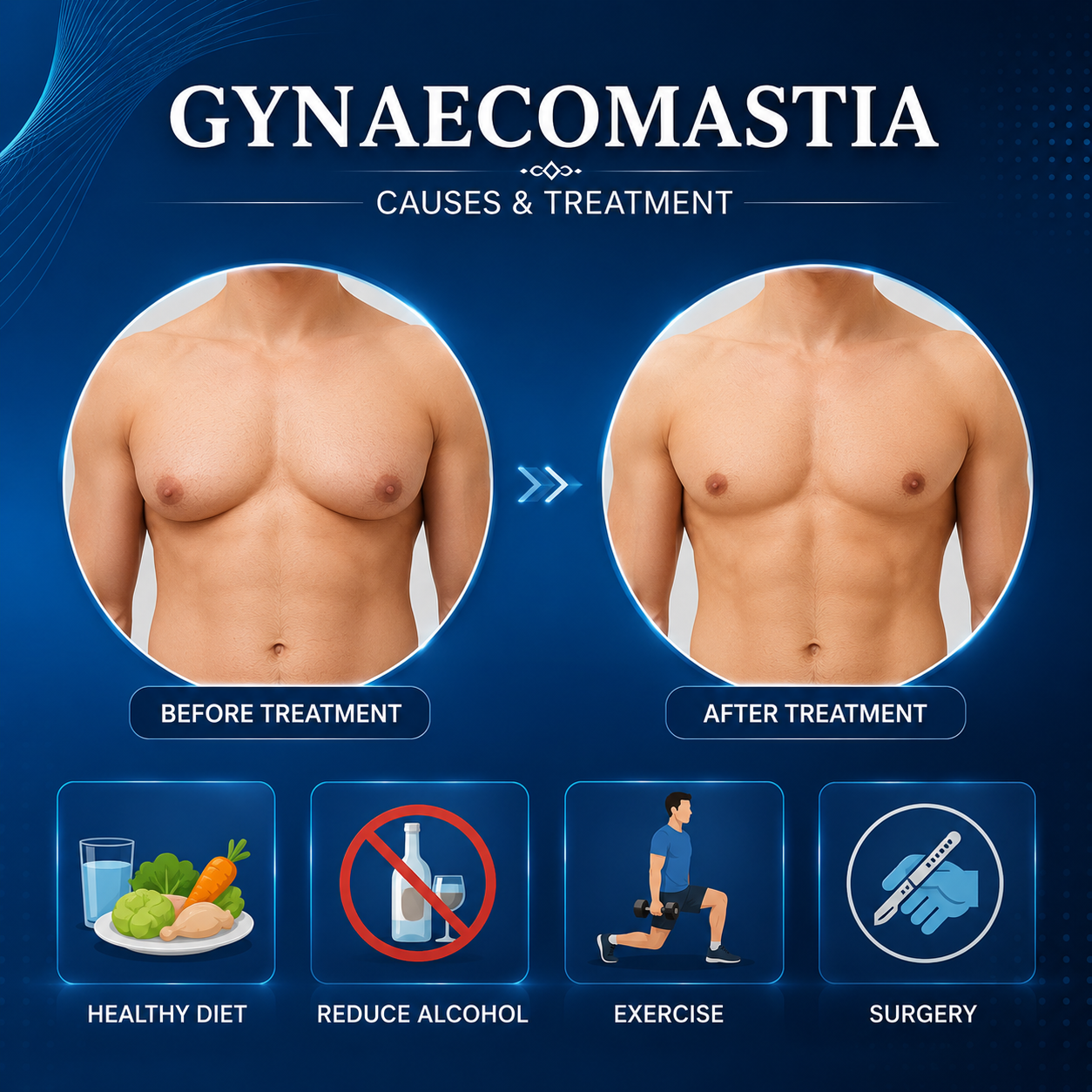
Gynaecomastia is a medical condition in which males develop enlarged breast tissue due to an imbalance between the hormones estrogen and testosterone. It can affect one or both breasts and may occur during infancy, puberty, or adulthood. Although it is usually not a serious health concern, it can cause physical discomfort, tenderness, and emotional distress.

Treatment depends on the underlying cause, severity of the condition, and the patient's symptoms.

Common Symptoms
Enlarged tissue
Swelling
Pain
Sensitivity
Lump
Distress
1–2 weeks

Procedure

High

Success Rate

4–6 weeks

Complete Recovery

1K+

Successful Treatments

Trusted care
Why Gynaecomastia Surgery?
✓ Permanent removal
✓ Better chest shape
✓ Minimal scars
✓ More confidence
✓ Fast recovery
✓ Lasting results

Types of Gynaecomastia:

Physiological Gynaecomastia: This is the most common type and occurs naturally due to hormonal changes during infancy, puberty, or older age. It often resolves on its own without requiring treatment.

Pathological Gynaecomastia: This type develops as a result of an underlying medical condition, hormonal imbalance, certain medications, liver or kidney disease, or tumors. Medical evaluation is necessary to identify and treat the underlying cause.

Pseudogynaecomastia: Pseudogynaecomastia is caused by excess fat accumulation in the chest rather than enlarged glandular breast tissue. It is commonly associated with obesity and can often improve with weight loss and regular exercise.

Unilateral and Bilateral Gynaecomastia: Gynaecomastia may affect only one breast (unilateral) or both breasts (bilateral). While bilateral enlargement is more common, unilateral cases also require medical assessment to rule out other conditions.

Common Causes:

Hormonal Imbalance
Estrogen & testosterone
Puberty Changes
Hormonal shifts in teens
Aging
Natural hormone changes
Obesity
Excess body fat
Medications
Steroids, anti-androgens
Liver/Kidney Disease
Organ dysfunction
Thyroid Disorders
Hormone imbalance
Alcohol/Drugs
Substance use
Rare Tumors
Hormone-producing

Gynaecomastia FAQs

Answers to common questions about gynaecomastia treatment, recovery and aftercare.

Gynaecomastia is the enlargement of male breast tissue caused by a hormonal imbalance between estrogen and testosterone.

Common causes include puberty, aging, certain medications, underlying health conditions, and hormonal changes.

Gynaecomastia is usually not harmful, but it can cause emotional distress or tenderness in the breast area.

Diagnosis is based on physical examination, medical history, and sometimes blood tests or imaging studies.

Treatment may include observation, medication, or surgery (such as liposuction or gland excision) depending on the cause and severity.

Surgery is generally safe when performed by a qualified surgeon, with risks similar to other minor surgical procedures.

Most patients return to normal activities within a week, but strenuous exercise should be avoided for 3–4 weeks.

Consult a doctor if you notice breast enlargement, pain, nipple discharge, or any lump in the breast area.

Still Have Questions?

Book a consultation with our experienced specialists for personalized treatment guidance.

Book Consultation