GENERAL SURGERY CARE

Understanding Gallstones

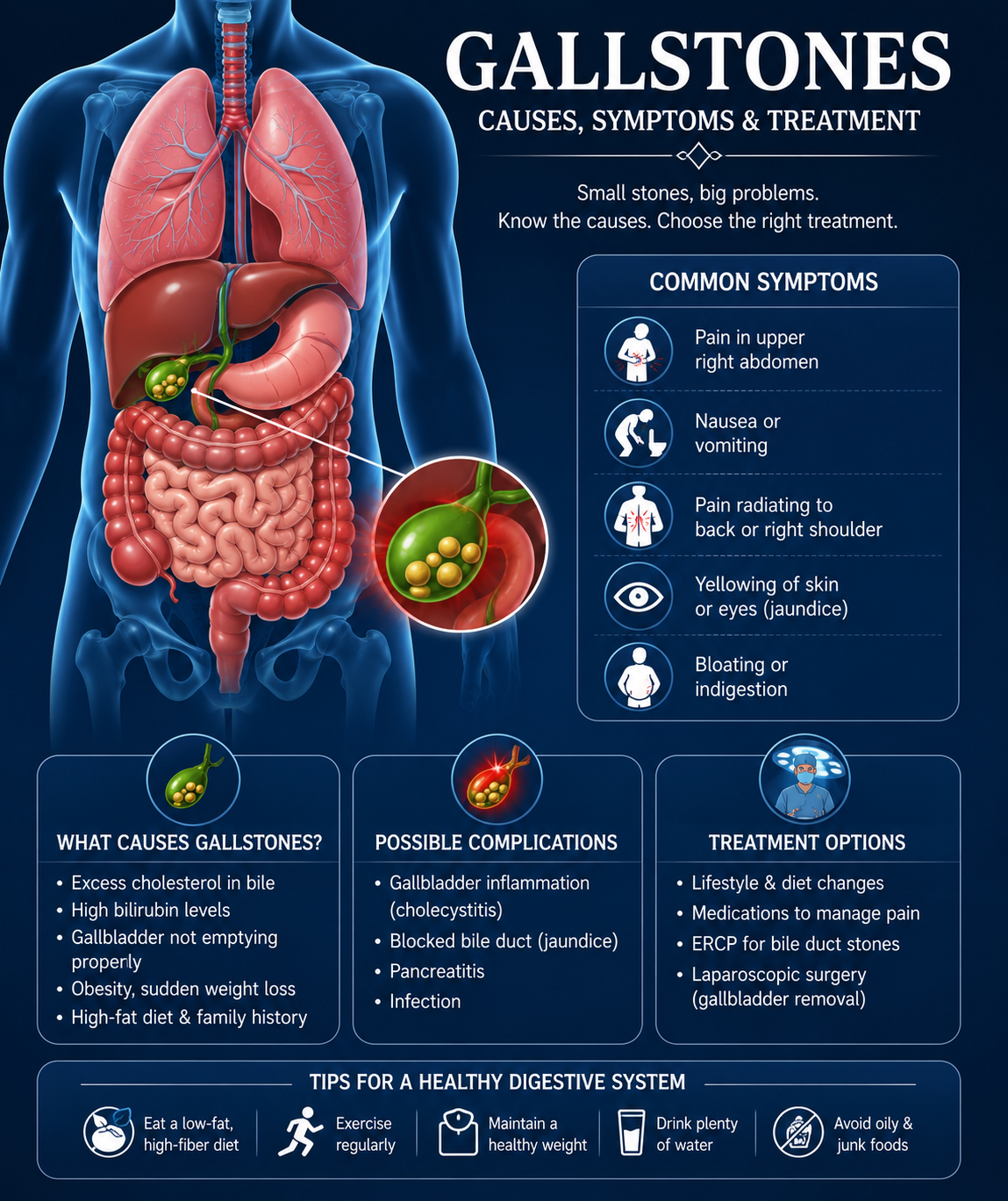
Gallstones are hardened deposits of digestive fluid that form inside the gallbladder, a small organ located beneath the liver that stores bile. They can vary in size from tiny grains of sand to large stones. While some gallstones cause no symptoms, others can block the flow of bile and lead to severe abdominal pain, inflammation, infection, or other complications.

Treatment depends on the size of the stones, the severity of symptoms, and the patient's overall health.

Common Symptoms
RUQ pain
Upper mid pain
Pain to shoulder/back
Nausea/vomiting
Indigestion
Bloating
Fever/chills
Jaundice

1–2 weeks

Laparoscopic Gallbladder Surgery

4–6 weeks

Open Gallbladder Surgery

4–8 weeks

Complete Recovery

1K+

Successful Treatments

Trusted care
Potential Benefits
Pain gone
No repeat attacks
Less infection
No blockages
Lower pancreatitis risk
Better digestion
Quick recovery

Types of Gallstones:

Cholesterol Gallstones: Most common; yellow/green, made of hardened cholesterol.

Pigment Gallstones: Small, dark stones from excess bilirubin; linked to liver disease or blood disorders.

Mixed Gallstones: Combo of cholesterol, calcium, and pigments; seen in chronic gallbladder disease.

Common Causes:

Excess Cholesterol
Too much cholesterol in bile
High Bilirubin
Elevated bilirubin levels
Incomplete Emptying
Gallbladder doesn't empty fully
Obesity
Higher risk with excess weight
Rapid Weight Loss
Sudden weight drop
Pregnancy
Hormonal changes
Diabetes
Increased gallstone risk
Liver Disease
Affects bile composition
Genetics
Family predisposition

Gallstones FAQs

Answers to common questions about gallstones causes, treatment, and recovery.

Gallstones develop when bile contains too much cholesterol or bilirubin, or when the gallbladder does not empty completely, allowing these substances to crystallize and form stones.

No. Gallstones typically do not dissolve or disappear on their own. Symptomatic gallstones usually require medical treatment, and surgery is often the definitive solution.

Yes. Laparoscopic cholecystectomy is a safe and commonly performed procedure with a high success rate and a low risk of complications.

Laparoscopic gallbladder surgery typically takes 45 to 90 minutes, depending on the complexity of the case.

Most patients can return to desk work within 3 to 7 days after laparoscopic surgery. Recovery may take longer after open surgery.

Yes. The liver continues to produce bile, which flows directly into the small intestine. Most people can lead a normal, healthy life without a gallbladder.

No. Once the gallbladder is removed, gallstones cannot form in the gallbladder again. However, in rare cases, stones may develop in the bile ducts, which may require further evaluation and treatment.

Still Have Questions?

Book a consultation with our experienced specialists for personalized treatment guidance.

Book Consultation